
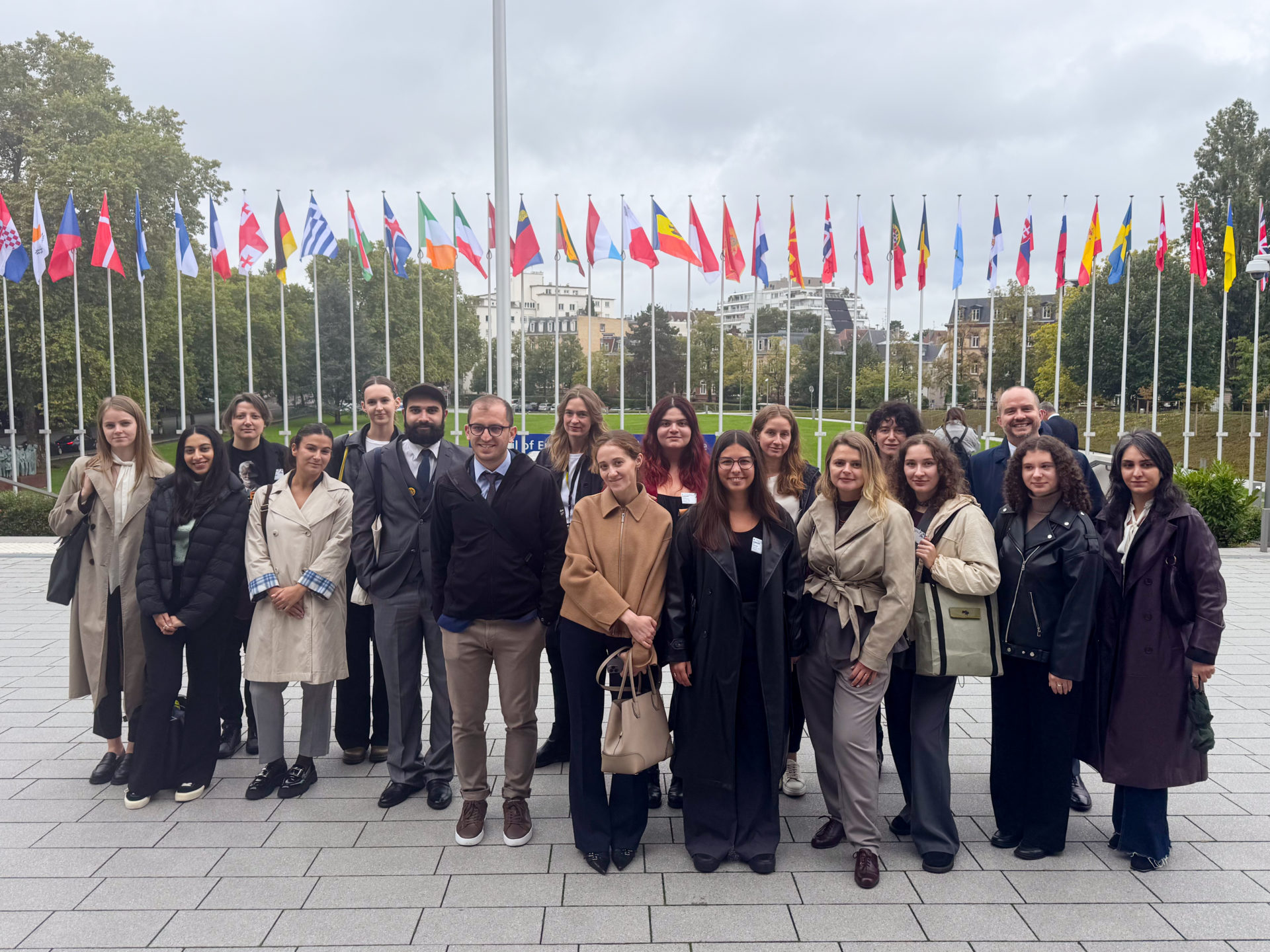


 Photographs from the 2025 Advocacy Training Programme can be found here.
Building Advocacy Skills for Engagement with the Council of Europe
The six-month programme – of which the Strasbourg visit was the cornerstone – supports human rights defenders from the Network of Human Rights Houses and partner organisations to strengthen their advocacy with the Council of Europe — a vital regional body for democracy and human rights, particularly in countries facing shrinking civic space and rising authoritarianism.
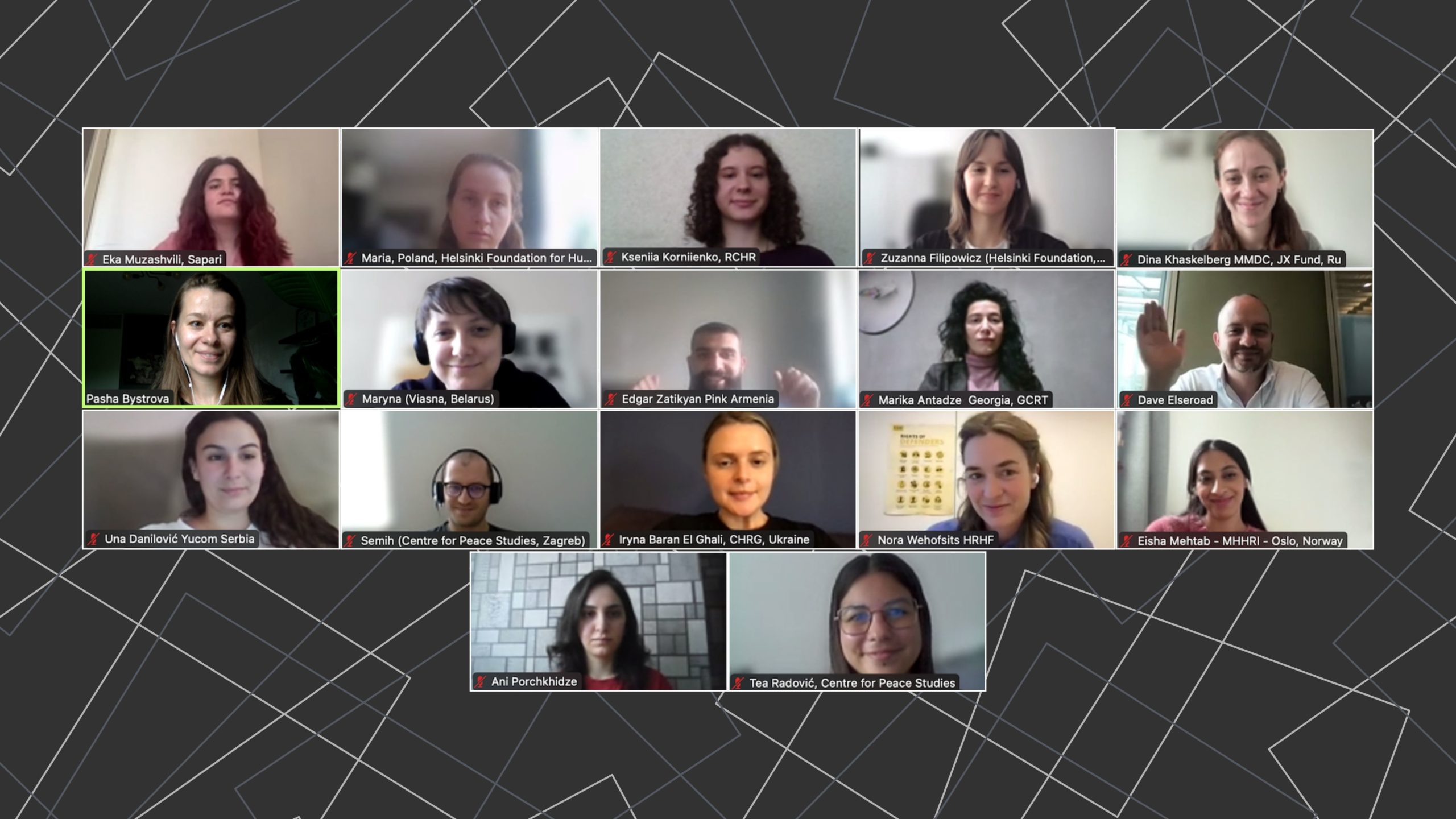
Launched in spring 2025, the programme combines online learning and in-person advocacy. Initial webinars introduced participants to Council of Europe institutions and their mandates, including the Secretariat-General, Committee of Ministers, and the Commissioner for Human Rights. These sessions also focused on practical advocacy tools, strategic messaging, and understanding the CoE human rights mechanisms.
The Strasbourg study visit gave participants the opportunity to put new skills into practice. Over five days, they met with Council of Europe officials, parliamentarians, and diplomats to refine their advocacy messages and present pressing human rights concerns from their regions.
Just finished the 2nd day of our Advocacy Training program at @coe of Europe organized by @HRHFoundation . I am very proud to be in the Council of Europe advocating for equal rights in Armenia and improving my own skill and expanding my knowledge on CoE mechanisms. pic.twitter.com/Mgroojn2w0
— Edgar Zatikyan (@Redcore_1234) September 23, 2025
“Putting Faces to Institutions”
“The Council of Europe was a blind spot for me,” said Iryna Baran El Ghali, International Advocacy Manager at Crimean Human Rights Group (Human Rights House Crimea), reflecting on her experience. “After this trip, I realised there are many possibilities for civil society to interact with different bodies. Personal meetings gave us not just understanding, but also contacts and interest from those institutions.”
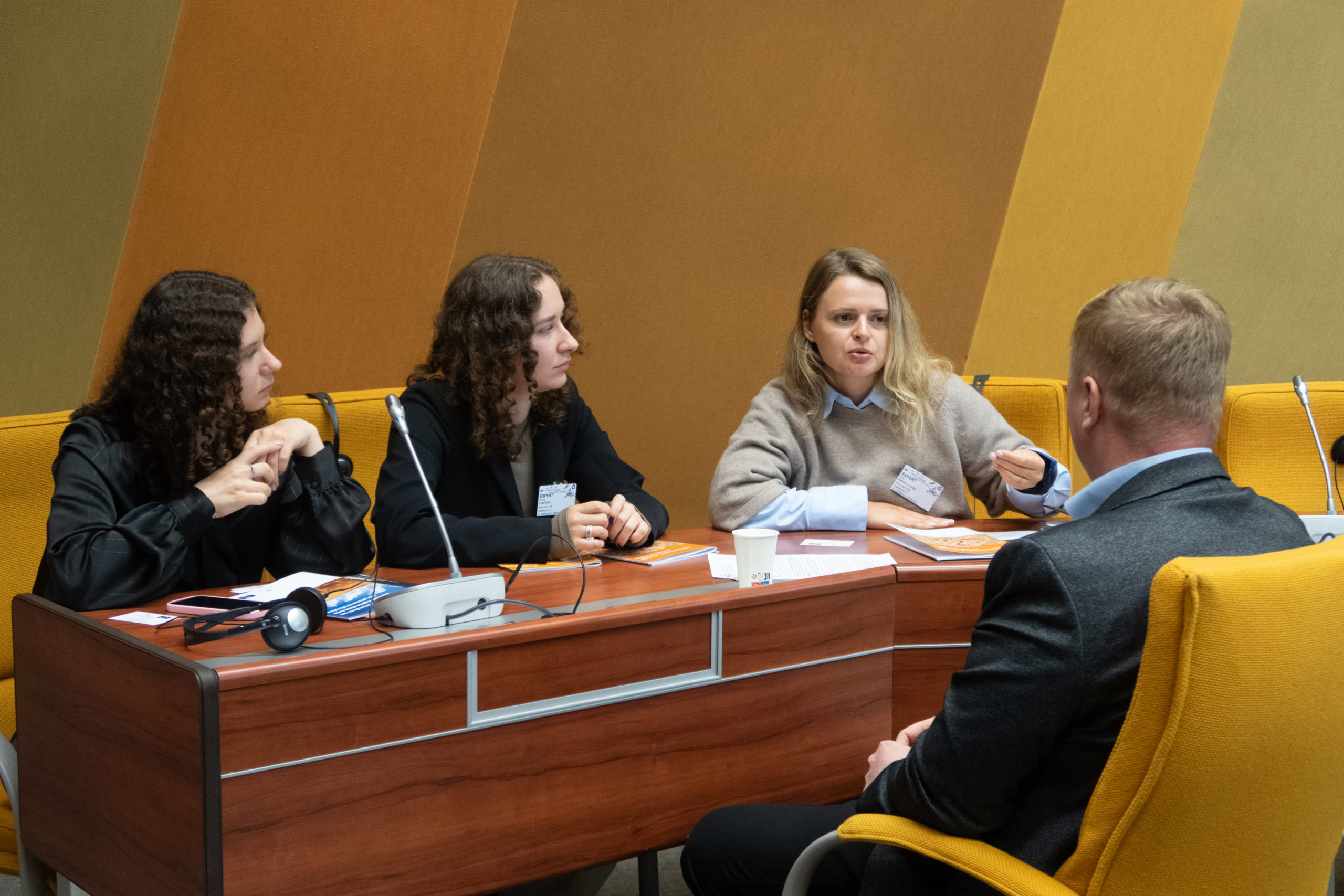
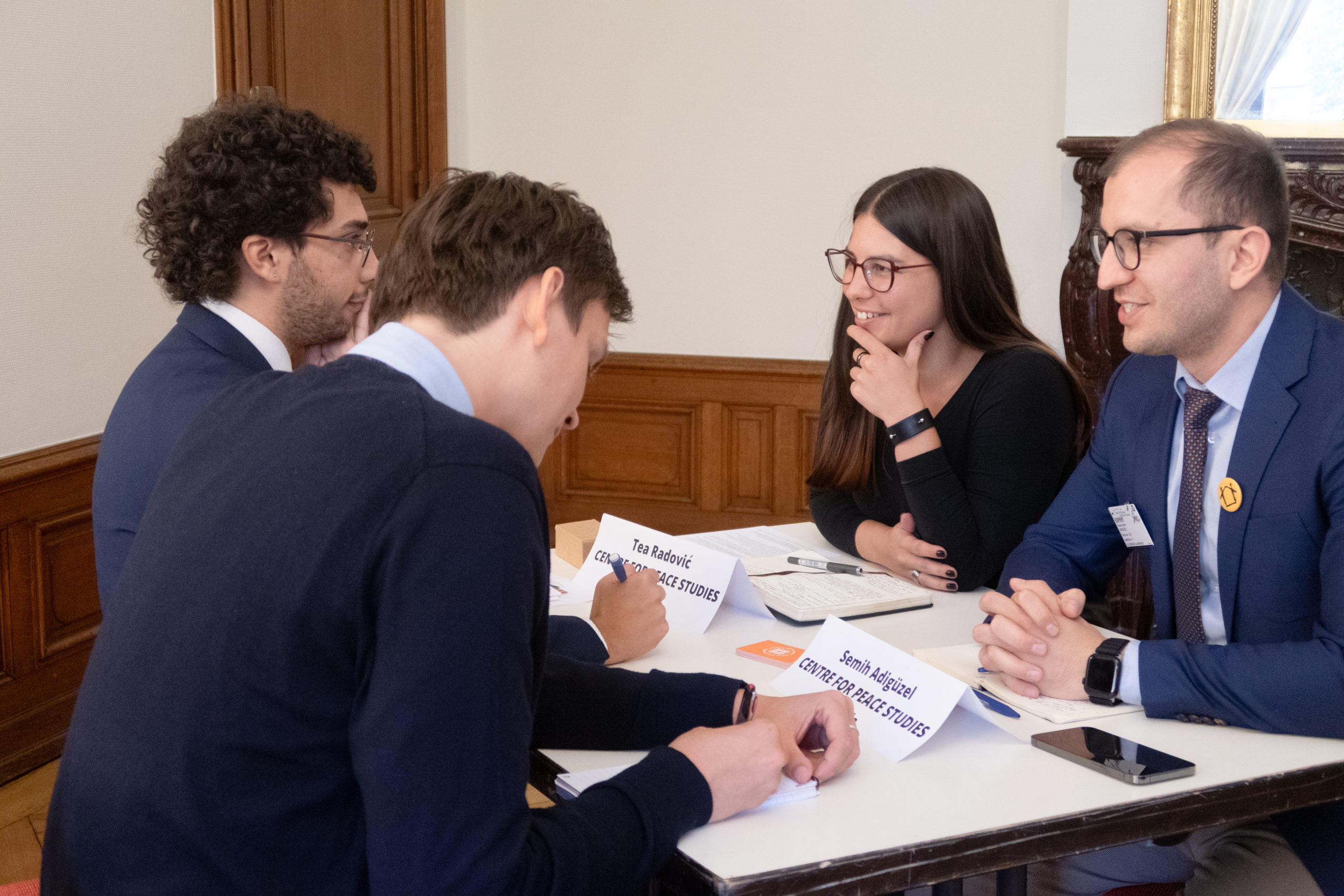
For Tea Radović, Program Coordinator at the Centre for Peace Studies (Human Rights House Zagreb), the experience made the Council of Europe feel tangible and accessible. “When you start working in human rights and try to understand all the different bodies within the Council of Europe, it’s really hard to do that just by looking at the websites. This programme helped me… get to know the people working within the Council of Europe. It helped me put faces to institutions that [previously] felt abstract, and to learn how we, as CSOs and human rights defenders, can engage with them — and where the real entry points are for us.”
Advocacy in Action
Over five days, participants held high-level advocacy meetings with the Deputy Secretary General of the CoE, PACE Secretary General, and Director of the Congress of Local & Regional Authorities, as well as high-ranking diplomats from a number of member States. Participants engaged with key staff from the Secretariat-General’s Office, the PACE, and Office of the Commissioner for Human Rights, to discuss thematic and country-level human rights issues and trends. These encounters helped refine their messages and strengthen their confidence in international advocacy. Participants also had the opportunity to have a private meeting with a judge from the European Court of Human Rights.
Among the highlights of the week was a “speed-dating” style event hosted by the European Union Delegation to the Council of Europe, where human rights defenders from Armenia, Azerbaijan, Belarus, Croatia, Georgia, Norway, Poland, Ukraine, Serbia, and Russia briefed diplomats on the situation for human rights and civil society in their countries. The discussions covered the impacts of Russia’s war against Ukraine, democratic backsliding and rising authoritarianism, crackdowns on civic activism, and growing mental health challenges among human rights defenders.
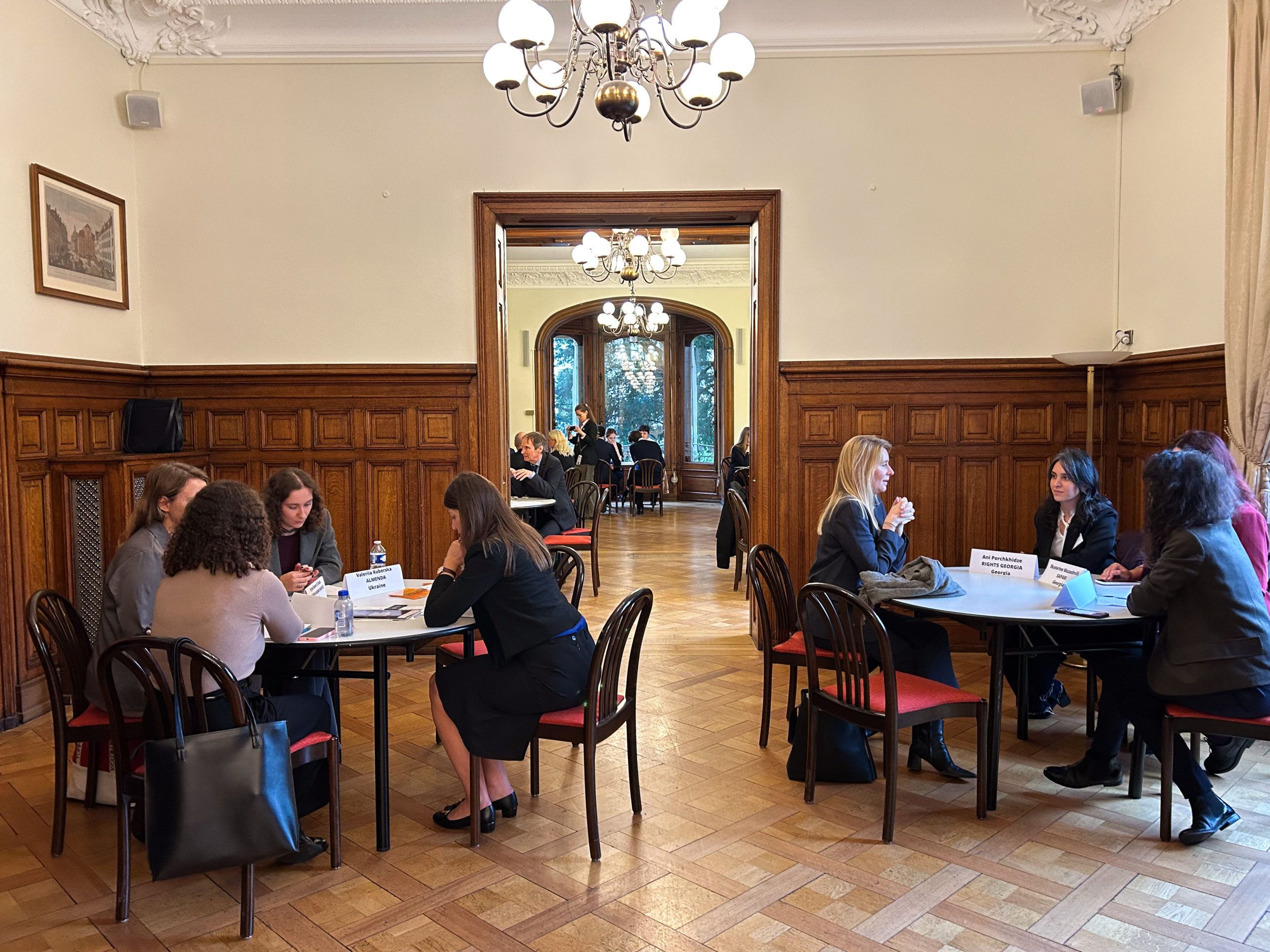
“Victims of human rights violations and international crimes must be protected and not forgotten,” said Kseniia Korniienko, Senior Lawyer at Regional Center for Human Rights, who used the event to highlight the plight of prisoners of war and civilians affected by conflict. “Their rights must be restored, they must receive adequate compensation, and perpetrators must be held accountable.”
Eisha Mehtab, Volunteer Advocacy Member at Mental Health and Human Rights Info (Human Rights House Oslo), used the opportunity to bring attention to a frequently overlooked issue:
Pushing for mental health support for human rights defenders has been extremely important because it’s rarely discussed in these settings. I am really happy that I have been honoured to spread this message more further and hoping for better conversations in the future.
Others highlighted the speed-dating format encouraging open dialogue. Maria Poszytek, Attorney at Helsinki Foundation for Human Rights, said the event “gave the opportunity to talk more freely with representatives of states, find common ground, and establish contacts that will be useful for future advocacy.”
For some of the human rights defenders, the exchange also revealed knowledge gaps among diplomats making such meetings ever more important. “Many of our [counterparts] did not have knowledge about the backsliding in Georgia or in our region,” shared Ani Porchkhidze, Lawyer at Rights Georgia (Human Rights House Tbilisi). “It made me realise how important it is that we continue to inform and advocate on these issues. I appreciated the openness and honesty from their side… The distance between us definitely feels a lot less now”.
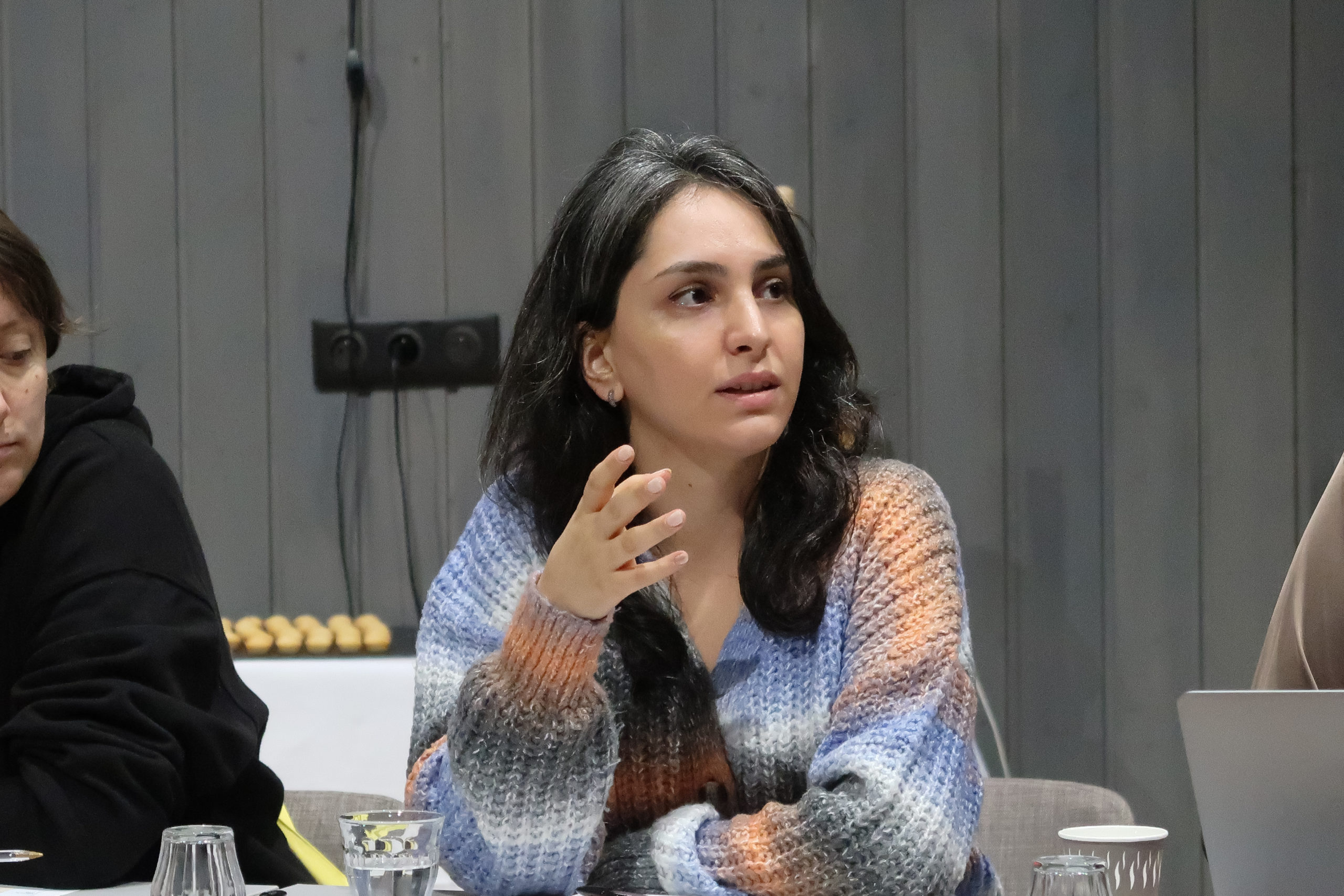
Una Danilović, Legal Advisor at Lawyers’ Committee for Human Rights YUCOM (Human Rights House Belgrade) reflected on the value of direct engagement:
“The programme was very useful — we discovered so many new entry points for civil society organisations. I no longer feel the same distance from the Council of Europe as before. Not necessarily from its institutions, which can seem abstract, but from the people we met, who genuinely gave the impression that they care.”
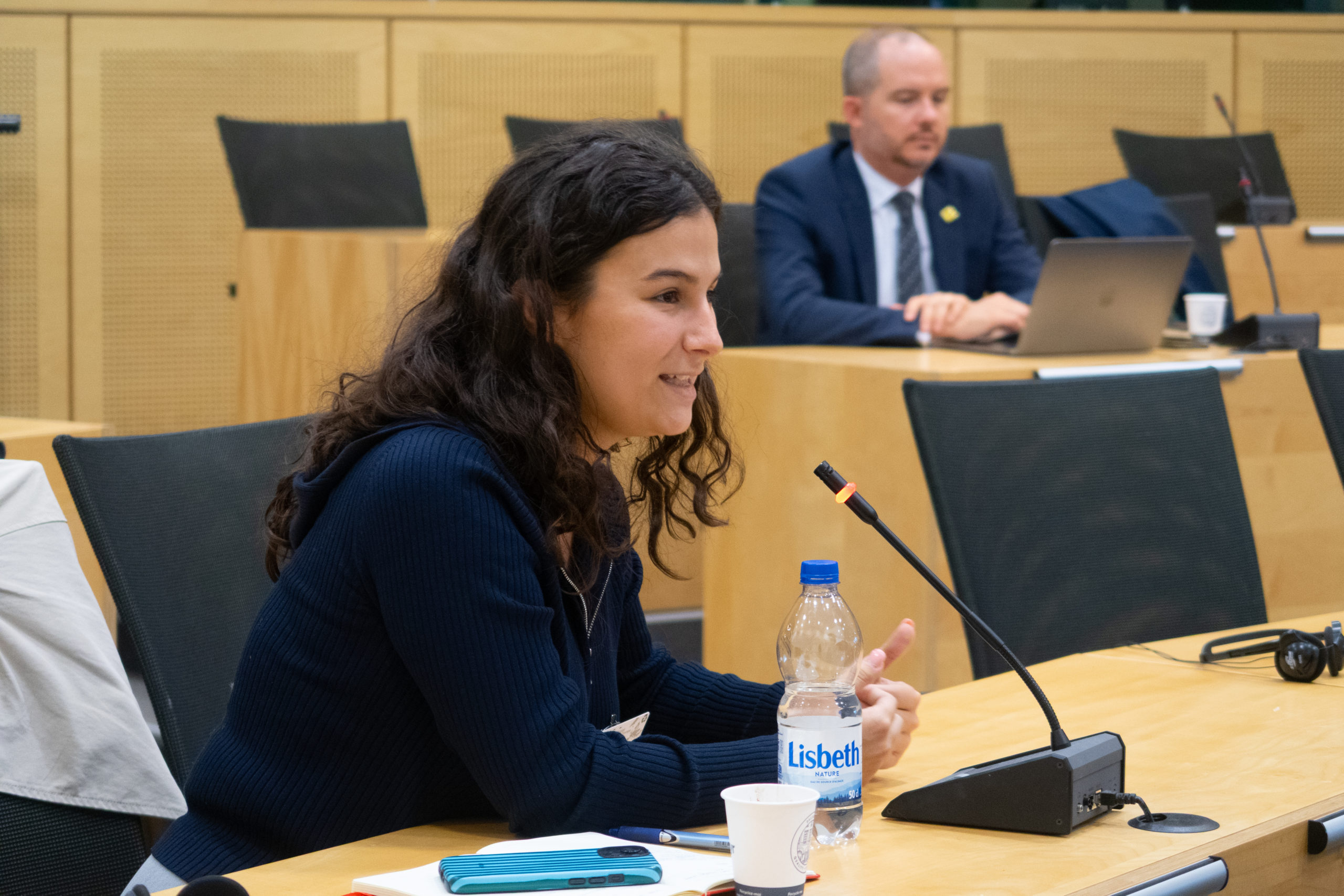
She added that the meetings with the Office of the Commissioner for Human Rights and Congress of Local and Regional Authorities were particularly meaningful.
“I didn’t know what to expect from the meeting with the Commissioner’s Office, but speaking with one of the advisers was extremely helpful. I was happy to hear that I can provide additional information useful to upcoming work. I was also surprised by how useful the discussion with the Congress of Local and Regional Authorities turned out to be — it gave me new ideas on how to link local and national advocacy. We exchanged contacts, and I left that meeting genuinely encouraged.”
Danilović was struck by the genuine curiosity shown by diplomats.
“I was surprised by how much they wanted to learn about Serbia,” she said. “I didn’t really expect that, especially with a war going on in Europe. But there were a lot of questions about Serbia, and I was really excited by that interest.”
Reflecting on the broader impact of the meetings, her colleague from Croatia, Tea Radovic added:
What stood out to me was that the conversations weren’t only helpful for us to learn more about the Council of Europe and the people we can engage with, but also for them to learn more about our work, our issues, and our concerns.
CoE Officials Underline the Vital Role of Civil Society
Throughout the week, European diplomats and Council of Europe representatives emphasised the central role that civil society plays in sustaining democracy.
“Civil society and independent NGOs throughout Europe are a vital part of upholding democracy,” said the CoE’s Deputy Secretary General Björn Berge, following the roundtable meeting with the HRDs from the Network of Human Rights Houses. “They are the ones who raise difficult issues… alert us to certain situations and developments in member States. They are also a partner for us when we work to address some of these challenges… The cooperation we have with civil society — we appreciate it and we depend on it to be able to do our best.”
“Working together with civil society — with you — is one of our strongest lines of defence against the attacks on human rights and the democratic backsliding that is occurring around us today.”
Study visit of 18 young advocates from the Network of Human Rights Houses… pic.twitter.com/QMtvAhh7Oa
— Bjørn Berge (@DSGBjornBerge) September 23, 2025
The direct exchange was also appreciated by diplomats. Anna Pogwizd, Deputy Head of the EU Delegation to the Council of Europe noted:
It was a great opportunity to listen directly from human rights defenders… those who work directly on human rights, democratisation, and the rule of law issues… The input we heard is something we use on a regular basis in our dialogues with [member states]… The format is also excellent: a speed dating format where we move between the tables, dedicated to a country or to an issue, within two hours [is a] very efficient way to learn about the issues.
“The discussions shed light on the many — and often interconnected — issues and challenges that civil society organizations in countries across Europe are currently facing… Democracy cannot thrive without civic engagement and participation,” noted Alexandra Calu from the Permanent Representation of Romania to the Council of Europe.
The programme also featured the first diplomatic reception dedicated to civil society participation at the Council of Europe, hosted by the Norwegian Permanent Delegation to the Council of Europe with welcoming remarks from its Ambassador Vebjørn Heines, and Ambassador Muriel Berset Kohen, Permanent Representative of Switzerland.
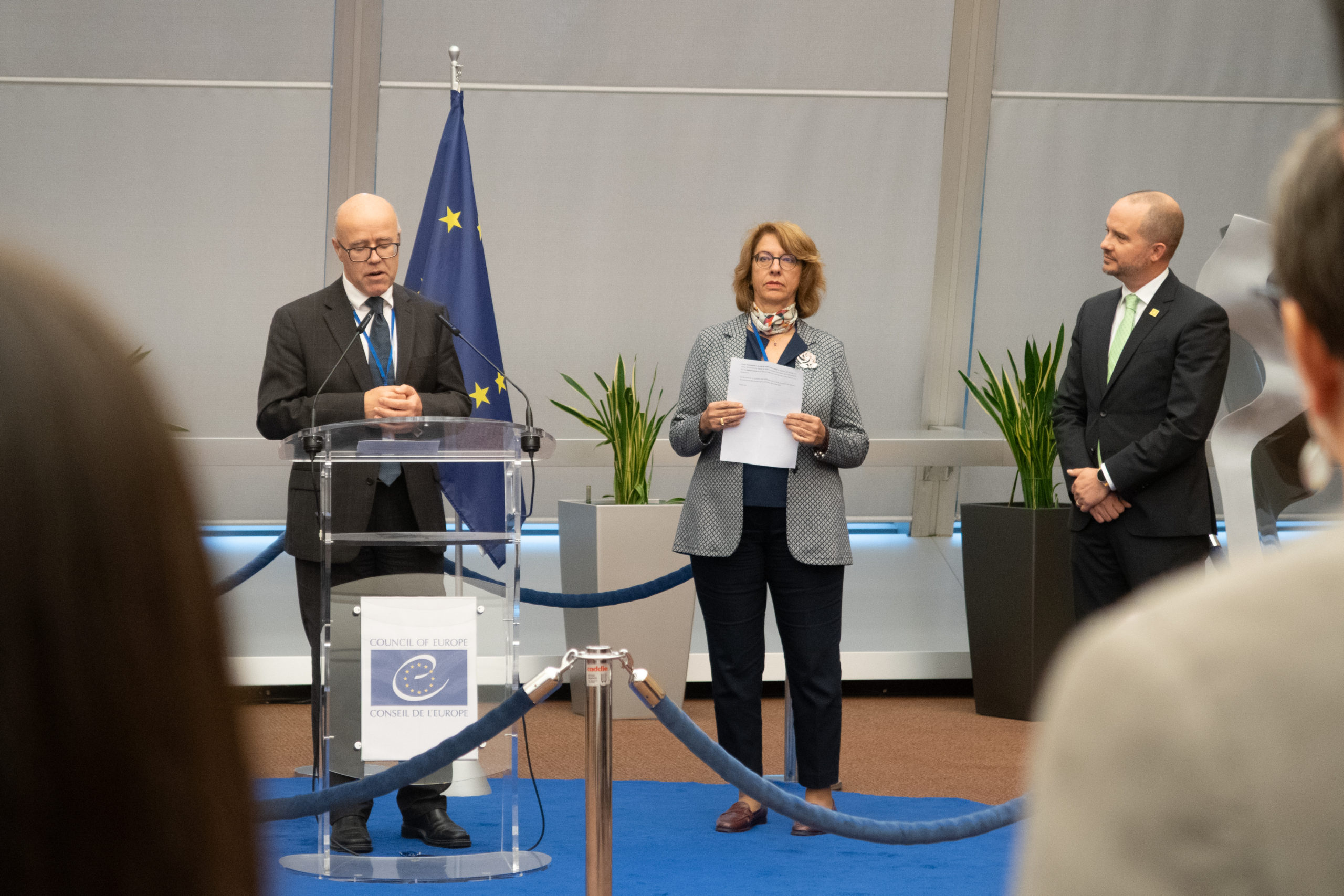
In his opening remarks, Ambassador Vebjørn Heines underlined:
Civil society and human rights defenders are immensely important for the Council of Europe. Progress in human rights and democracy could never happen without a very vital civil society and strong and engaged human rights defenders.
His Swiss counterpart, Ambassador Muriel Berset Kohen noted:
“The Council of Europe is about democracy, human rights, and the rule of law. And the role of civil society, human rights defenders is key in this. At the Council of Europe, we often speak of the concept of the security of democracy. But how can you ensure democracy without civil society and human rights defenders? I don’t think it’s possible. Human rights defenders are at the heart of living democracies.”
Lotta Valtonen, Policy Advisor at the NGO-Unit of the Council of Europe, reflected on how the programme strengthens collaboration between the Council of Europe and civil society:
“This project is very helpful because it raises awareness of the standards and tools that the Council of Europe has developed — resources that civil society can use to strengthen democracy and civic participation. It also helps us strengthen our engagement with civil society and maybe find new ways to engage with it.”
Voices of Solidarity Across the Network of Human Rights Houses
The study visit allowed several solidarity actions and support exchange. Taking place just before the PACE session and the Václav Havel Human Rights Prize ceremony, human rights defenders from the Network of Human Rights Houses called for the release of all political prisoners — including colleagues and former laureates Ales Bialiatski and Anar Mammadli.
Happy birthday, Ales!
Next week @PACE_News will award its Vaclav Havel Prize. 6 laureates remain behind bars, incl. our colleagues Ales Bialiatski & Anar Mammadli. Thank you @dchatzi1 for joining our call for the release of all political prisoners.#HRHsInStrasbourg @coe pic.twitter.com/yzidU79eDS
— Human Rights House Foundation (@HRHFoundation) September 25, 2025
The visit coincided with Ales Bialiatski’s 63rd birthday, making the experience deeply personal for the programme participant and his colleague Maryna Kastylianchanka, Campaign Coordinator at Viasna Human Rights Center, who spoke of her imprisoned colleague:
I’m glad to be here at the Council of Europe — the programme is very useful for me, and this place has a special meaning because our colleague Ales Bialiatski once stood here. Now he is in prison in Belarus, turning 63 — his fifth birthday behind bars, away from his family and friends. But I believe the time will come when he will once again bring the truth about human rights in Belarus to the Council of Europe.
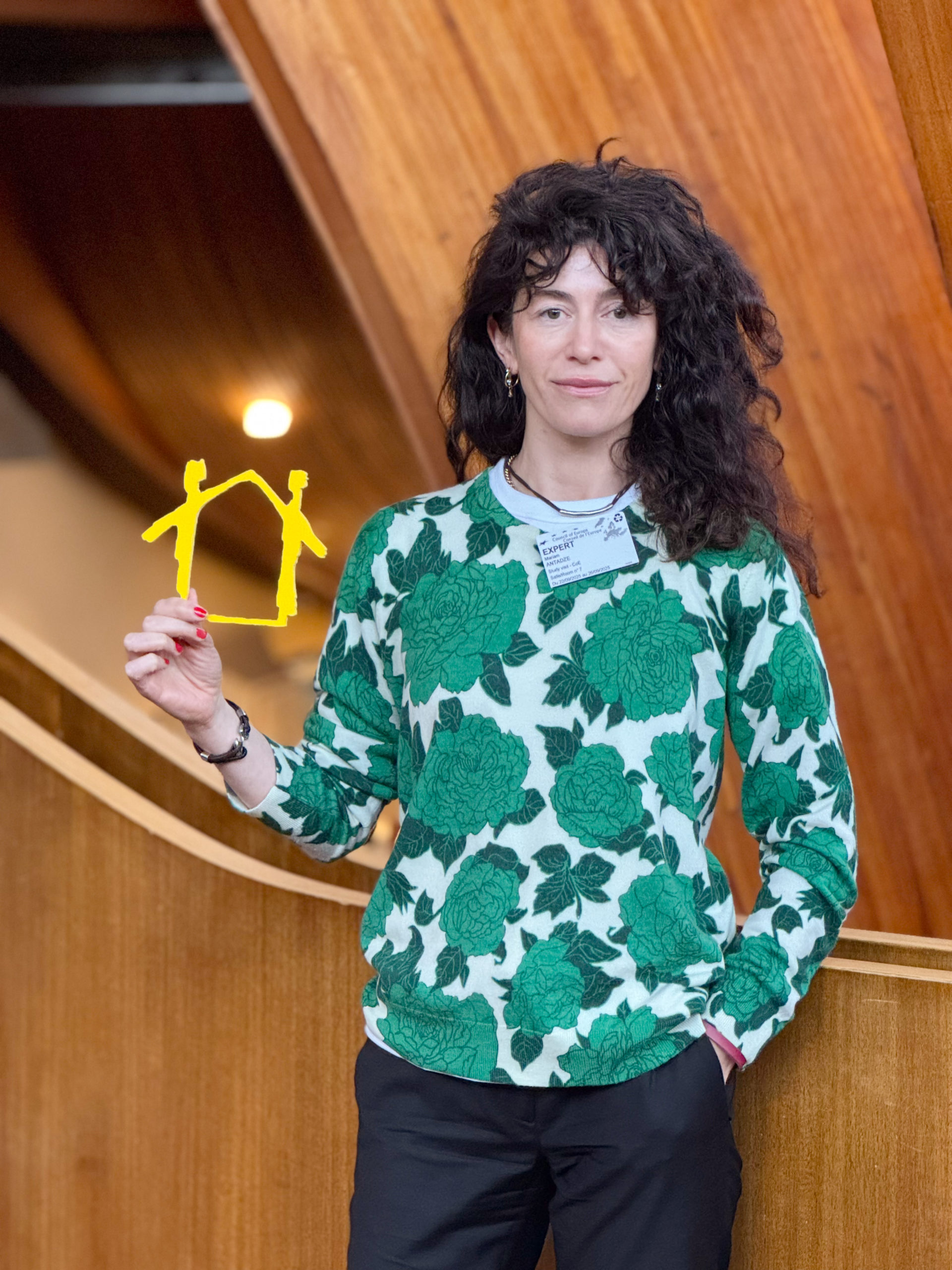
Others highlighted the sense of regional connection. Mariam Antadze, Project Coordinator at the Georgian Centre for Psychosocial and Medical Rehabilitation of Torture Victims (GCRT), recalled:
The most memorable thing I will take from [this visit] is my colleagues — seventeen advocates from different countries and organisations who all really care about Georgia. It was very surprising for me that Georgia, in this current political situation, is in everybody’s mind, [despite] the crack down on democracy in every country. I felt solidarity from everyone.
From Training to Action with Hope
“Civil society voices are essential at the Council of Europe if the institution is to stay relevant and responsive to the challenges facing Europe today,” said Nora Wehofsits, International Advocacy Officer, HRHF.
“We were very happy to hear, in participants’ feedback, that the meetings and workshops this week have already equipped and encouraged them to develop concrete follow-up plans. We will continue to accompany them in their future engagement with the Council of Europe.”
As the week closed, participants began the process of drafting action plans to apply their new knowledge at home. Maria Poszytek, Attorney at the Helsinki Foundation for Human Rights, summed up the mood:
“We learned a lot about different CoE bodies and how we can interact with them. I already have many new ideas on how to use this knowledge in my work.”
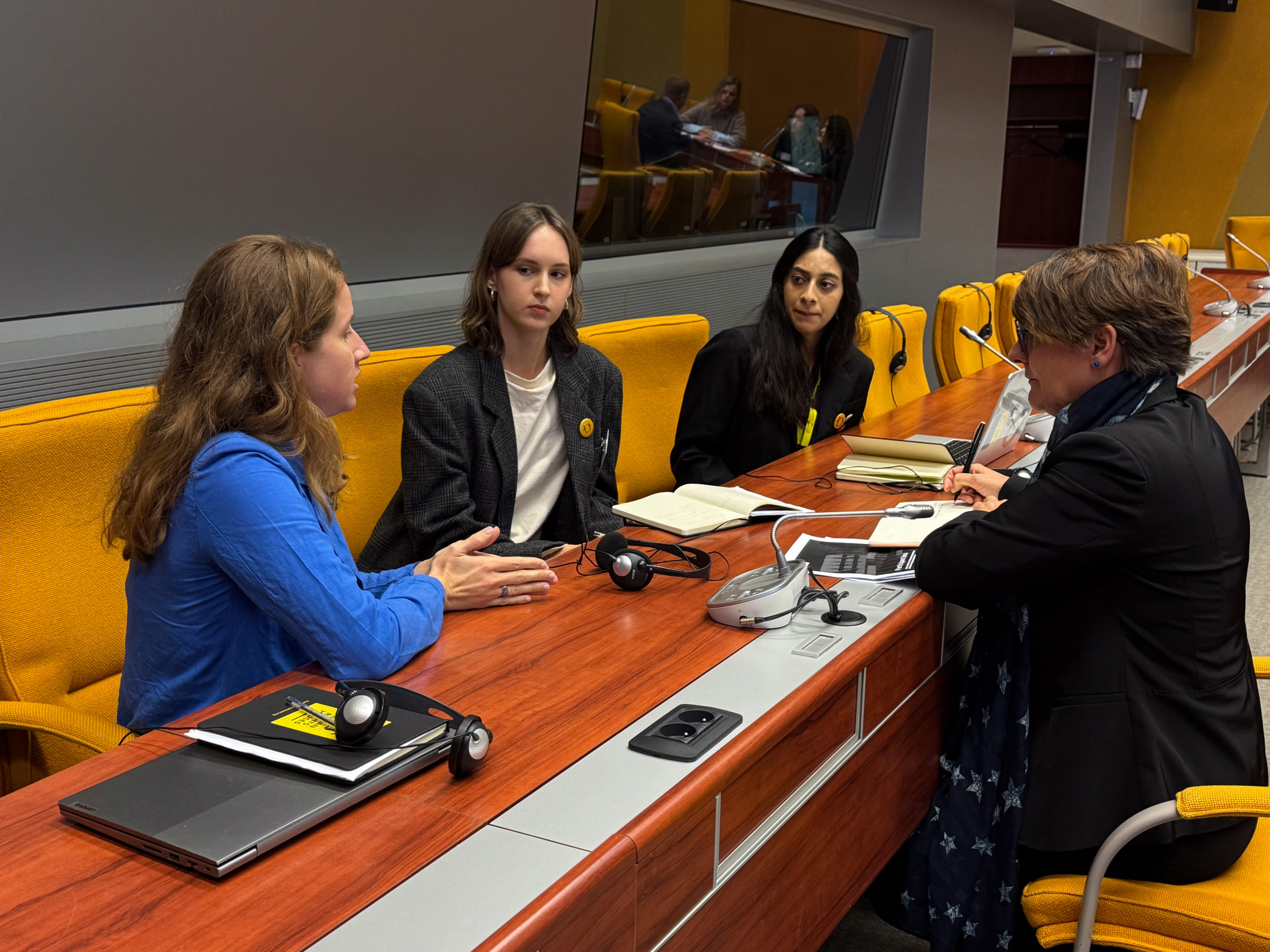
Her colleague Zuzanna Filipowicz added that the week’s discussions provided both practical tools and emotional encouragement.
We received a lot of useful tips, but also important reminders about why our work matters. Hearing others recognise and value our efforts was motivating — it reminded us not to lose hope, engage with the Council of Europe, and not to give up on protection work.
For one of the participants representing a Russian organisation, hope was among the programme’s takeaways. They shared: “Coming to [the study visit] I did not have many expectations, but now I feel there is still some hope that human rights defenders can rely on.”
The success of this programme has been the opportunity it gave to pull back the veil on what can sometimes be an opaque and complicated organisation for civil society. But participants didn’t just have the chance to learn more about roles and responsibilities of CoE institutions and stakeholders. They engaged with these institutions and stakeholders in the promotion of human rights: briefing on timely human rights trends and issues, advocating for specific action by member States and CoE bodies, and building relationships at the CoE that their organisations and partners can use moving forward.
Dave Elseroad, Head of Advocacy, Human Rights House Foundation.
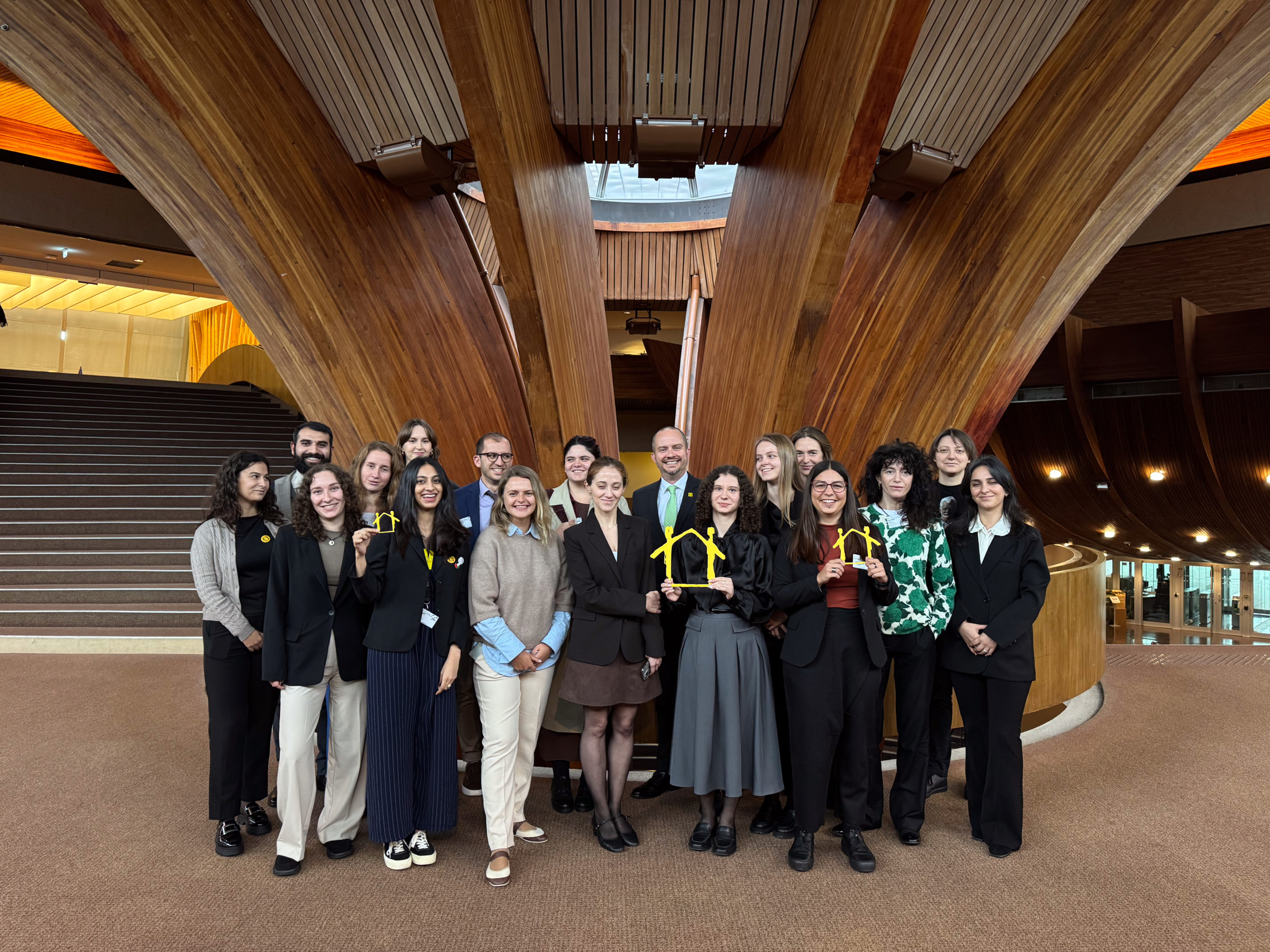
The 2025 Capacity-Building Programme for Emerging Human Rights Defenders from the Network of Human Rights Houses on Engagement with the Council of Europe is implemented by Human Rights House Foundation, with support from the Council of Europe, Norwegian Ministry of Foreign Affairs and the Federal Department of Foreign Affairs (FDFA) of Switzerland.


 and co-funded by the Council of Europe (CoE) and the governments of Norway and Switzerland.
The study visit took place one week before the Autumn session of the Parliamentary Assembly of the Council of Europe (PACE), giving participants timely insights and practical experience in engaging with CoE stakeholders and amplifying civil society’s voice at the heart of Europe’s system for protecting and promoting human rights.
&redirect_uri=http%3A%2F%2Fwww.facebook.com%2F)