


An abridged version of this interview was originally published in the Atlantic Council.
How are you, Andrei?
Well, things are moving little by little; different processes are going on. In my personal life, the main focus right now is on my health, because those are the more urgent problems. Then, in my free time, I deal with other matters.
Health issues — are these the consequences of imprisonment?
Yes, because unfortunately, you can’t control that.
The conditions themselves and the constant stress—which you eventually get used to and stop noticing—hit your health hard.
As people wrote long ago, even in the 19th century and still today, the consequences show up not in prison but later, when you’re free. During the first year or year and a half, everything surfaces—the whole experience of imprisonment. It’s like the body finally feels it can release everything that’s been piling up.
This October marks six months since your release and five years since your arrest. What do those dates mean to you now? What feelings come up?
In prison, when six months passed, then a year, two, three, those numbers felt oddly insignificant, because you were always surrounded by people who had already gone further and were serving longer terms. In prison, everything is relative: someone spent more days in the punishment block, someone had a longer sentence—so your own milestones feel smaller, less important. Once you’re free, you realise how big that time really is.
Especially when you start getting your life going again, you feel it differently: it’s a huge stretch of time—time in which, on the outside, you could have done a lot and lived richly. Prison time is essentially empty time. And with each passing month, there are fewer opportunities to turn it into anything meaningful for yourself, because the system strips those opportunities away. In Belarus, five years ago, there were more ways to make that time at least somewhat constructive. It’s about developing one’s potential—education first and foremost. Most of those options are gone now.
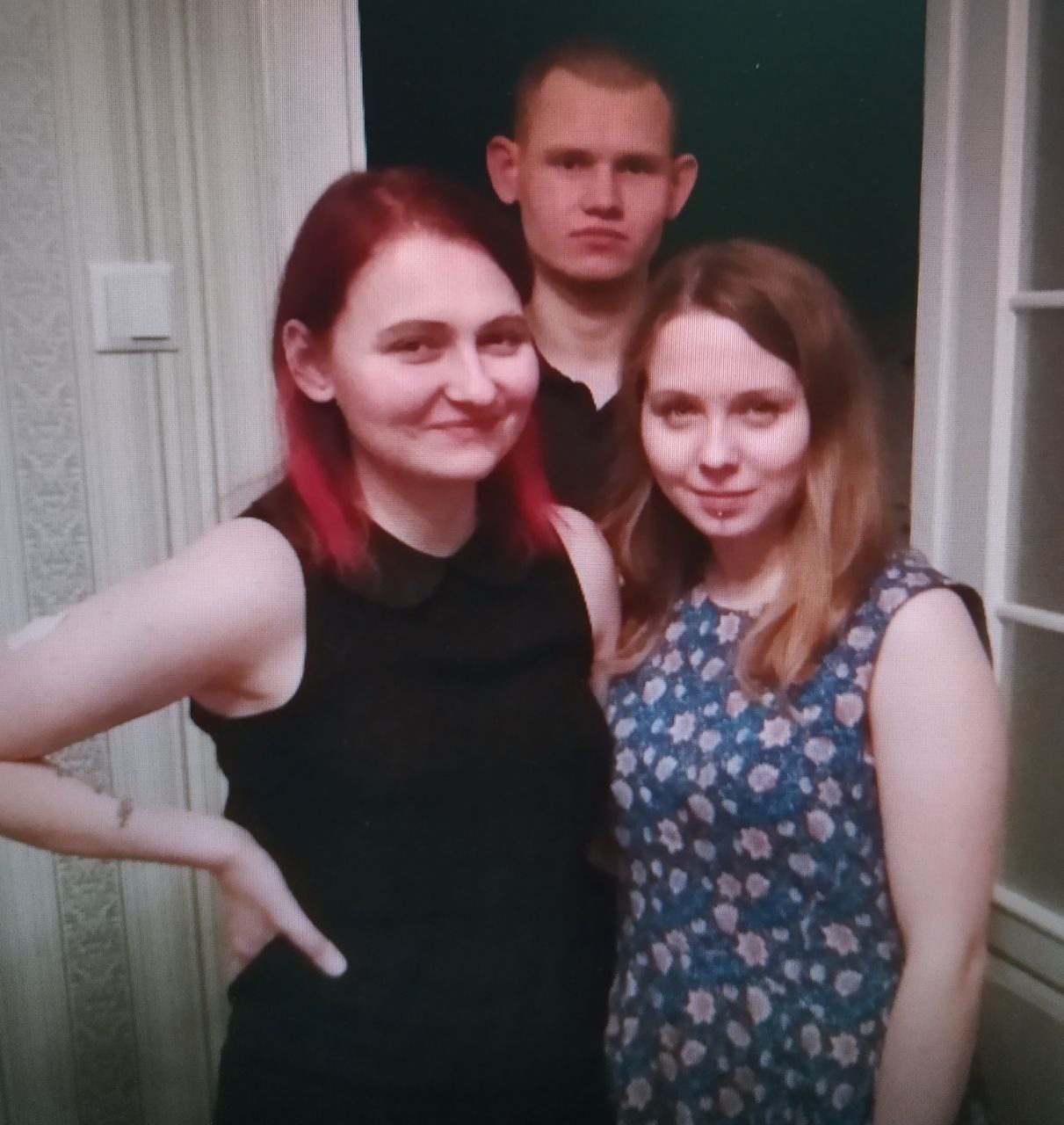
It has been five years since Masha [Marfa Rabkova, Viasna coordinator, serving a sentence of 14 years and nine months], was detained. I remember that day clearly, and of course it’s frightening; now it hits much harder when you’re [free], you realise five years is a long time. Masha has missed so much over this period, left so much behind. There are health problems, too—I think it will feel even heavier when she’s released, when she’s free; it will be even starker than those bits and pieces of information about her situation that are currently available to us. [Read more: “Five years is a long time.” Andrei Chapiuk on Marfa Rabkova]
You mentioned education. What changed?
When I got to the prison colony in 2023, absolutely every inmate had the right to apply to a specialised secondary education. It wasn’t even about the diploma—it gave you a bit more freedom to study and spend your time usefully. Six months later, officials from the Department of Execution of Punishment came, noticed that many students were from the “extremism” list [with all political prisoners on it], and decided to cut off access to education altogether.
At the same time, they were removing foreign-language books from prison libraries. It’s absurd—schools in Belarus require foreign languages, many inmates are legally required to complete basic education, and yet foreign-language shelves were emptied. At first, there were big stacks of books—albeit old ones—then, half a year later, only three textbooks in Belarusian were left on the “foreign” shelf [while the rest were in Russian].
People tried hiding their own books, changing covers—staff still found and confiscated them.
They even took personal books that inmates are allowed to receive and buy, “sent them to storage,” without any seizure record. The books just vanished. And books are of huge value inside [the prison].
Why were books confiscated?
I see it as a punitive measure. Someone in the department saw that inmates—especially political prisoners—were using lawful parts of the daily schedule to maintain some quality of life, to read and learn. The mindset in the system is: “They must suffer every hour.” And since political prisoners tend to value books and education, the system decided to eliminate those.
If there had been no imprisonment, how might your life have turned out?
It’s hard to say. I wouldn’t have the unique knowledge, experience, and contacts that I have now.
Given the situation in Belarus, I’d likely have ended up either imprisoned anyway or forced into exile.
Even before my arrest, many people around me left the country – not necessarily due to a threat to their safety, but it was just mentally unbearable – you’d open any news site and see brutal violence, right there on your street or the next district. It was shocking: crowds beaten [by the security forces] with batons despite offering no resistance; police smashing cars with impunity.
Historically in Belarus, after waves of civic activity, repression typically follows—usually targeting specific social groups or organisations.
I knew repression would come after 2020 [protests following elections]; I just didn’t grasp the scale or the lawlessness we see to this day.
So, before your arrest, you couldn’t imagine it happening to you personally?
I thought, at worst, they might detain me for up to three days as part of a standard procedure—check for a criminal case, find nothing, and release me. I didn’t imagine mass persecution of ordinary people on fabricated charges, with things never considered crimes—social-media comments, photos, stickers—suddenly labelled “extremism” or “insults.” They rewrote procedures, invented “experts” and “witnesses,” and used these tricks to jail people en masse. I didn’t think it could go that far.
What does “freedom” mean to you now compared with before and right after release?
Before, it felt more philosophical: freedom of the person, of participation and basic rights. Now it’s much more about responsibility and safety—personal responsibility, but also institutional responsibility. I used to focus on individuals; now I pay more attention to how institutions avoid accountability. In Belarus, people routinely suffer harm from [governmental] agencies and organisations, often in violation of the law, yet there’s no real way to hold institutions to account.
On a personal level, it was all very different before detention [comparing daily life in Belarus and Poland], daily life felt tense—constant low-level fear due – you never know if you were safe or not. It was hard to relax. Now it’s different. Outside Belarus, you can truly rest, feel everyday freedom, and actually enjoy the calm. Challenges like bureaucracy or language barriers feel surmountable—you just need more time. And if something doesn’t work out, it’s not catastrophic.
Looking back, how has your life changed in the first six months after release?
Right after release, I couldn’t quite grasp that I was free. I imagined I’d be with loved ones and the stress would lift, but I was in a kind of stupor. The first month in Belarus, my mood was slightly depressed—constant police check-ins and visits. It felt like I spent more time with the police than with friends or family.
The decision [to evacuate] itself wasn’t hard—it was obvious? Except the fear that it would not work out. I was under preventive supervision, on “terrorist” and “extremist” lists. I knew I wouldn’t survive the year and a half they’d assigned without being set up for violations—police used those tactics even before 2020. If my attempt to [evacuate] had failed, I’d likely be back in prison.
Some time has passed, and it’s not so hard to talk about it as before. Leaving meant losing immediate contact with family and loved ones, and with the country itself—its places and nature I’m attached to. I don’t know when I’ll be able to return.
What would life have looked like if you’d stayed in Belarus after release?
The longer you’ve been inside, the harder the transition. You step out into a world you last saw in late 2020, during COVID, where people were wearing masks. Now there’s a war; Belarus feels emptier; there are many labour migrants—even in small towns—because there’s no one left to work. Technology has leapt ahead—EVs, everything modernised—and you’re supposed to jump right in.
At the same time, the police presence is constant: mandatory check-ins twice a month, weekly “lectures,” nightly home visits—often at 11 or midnight, flashlights in your face, body cameras on, questions about your “obligations” as you’ve just woken up.
You adapt to the harassment as a given – You force yourself to hold back, because after the colony, you’ve developed the reflex that he’s a state/security official, and that even speaking to him in a raised voice is dangerous—fraught with consequences.
And the “cherry on top” is work: within 15 days [since the release] you must be employed, self-employed, or registered as an entrepreneur. If not, it’s a violation of the supervision conditions. At first, you usually face an administrative penalty (a fine or administrative arrest), but if it happens again, the consequences will be more serious—even criminal charges. This means that if I don’t get a job and serve my 24 hours under this charge, and then ride public transportation without a ticket and get a ticket, I have a good chance of being sent to a labour camp, as that’s already two violations.
But as someone on the “terrorist” list, you can’t open a bank account, register a business, use notaries, hire lawyers, or get insurance. Even getting a SIM card can be a problem.
So you scramble for any job, then discover your salary card can’t be issued.
Meanwhile, more state bodies have the power to summon you – I got letters like that. I thought I didn’t have to go, since they weren’t the police. Then I read it—nope. I’m obligated to them as well, because they have the authority. These so-called state bodies—not law enforcement, but some kind of ‘state associations’ appeared while I was in prison, and they’ve been given powers. Refusal to attend their meetings without a “good reason” brings administrative penalties.
You expect that once you’re out there’ll be no more police, no more of those people—that you’ll fence yourself off from that destructive world. You think, ‘That’s it, I’ll hide from that society and live in another one with different values,’ but you remain surrounded by that system. It swallows you. It’s a pseudo-freedom: you can choose your clothes and your bedtime [unlike in prison]; the control stays.
In a May interview with Viasna, you said you were still discovering what had changed during your imprisonment. What have you learned since—anything surprising or emotional?
After the first few weeks of solving basic needs, I started trying to “reclaim” what had been taken—professional development, qualifications, long-standing interests I couldn’t pursue. I read regularly—around a dozen books, some technical. I studied databases and application-building tools. In parallel, I’m learning the local language [since evacuating] to integrate, and I read fiction that people recommended.
Two books I really liked: Noise: A Flaw in Human Judgment (Daniel Kahneman, Olivier Sibony, Cass Sunstein) and Malcolm Gladwell’s Outliers [often known in translation as “Geniuses and Outsiders”].
On the tech side, what shocked me most was AI. In prison, you only catch scraps of information and rumours—something powerful is emerging, reshaping markets, taking jobs. I wanted to understand at least the basics of how it works. I met people who could explain a little, then some materials on machine learning reached us, and I began to grasp it conceptually. After release, when I finally tried the tools myself, I was amazed at how cohesive and interesting they are.
Honestly, at first I felt like I’d come out of the Stone Age. It was even hard to work with a computer or a phone after so long.
What about the full-scale Russian invasion of Ukraine—how did information reach you, and how did you process it?
News reached us with delays and through Russian/Belarusian TV, which was nonstop propaganda—early on, they pushed stories about chaos in Ukraine, mass distribution of weapons, and looting. Only later did I learn the reality: cities captured, communications cut, heavy casualties. There was a constant sense of fear: you’re locked in a box, and 500 kilometres away, something horrific is happening and escalating.
People discussed when it would reach us: whether Belarus would enter the war or Russian troops would simply operate from our territory. There was a real fear that Belarusians—like in Russia—would be used as expendable material, including inmates sent to the front lines.
I worried that we would end up—as is basically happening now—being accomplices. That probably worried me most: that we’d carry that stigma, that we too are complicit in these terrible events. When you’re still on that territory—worse yet, in prison—you realise you might be held responsible simply because you’re a citizen of that country, an aggressor state, so to speak. And you can’t leave, can’t even minimally distance yourself and say, ‘I’m not there, I have nothing to do with it,’ because it’s right here, right now—pressing in even more.
Even the guards were scared in those first days; you could tell they were following alternative sources as well. I think many younger staff in prisons and pretrial centres left afterwards—not only because the work is miserable and poorly paid, but because, as military personnel [in Belarus] today, you are simply carrying out the will of the dictator, and tomorrow you can be cannon fodder in a war that Belarus has no interest in.
We hear that international attention can sometimes bring extra repression for political prisoners in Belarus. Is that true?
It’s complicated. Repression happens regularly regardless of publicity. Sometimes, the authorities pressure a prisoner right after the first media mentions, so he’ll tell relatives, “Don’t post anything, you’re making it worse.”
But when there’s steady coverage, I’ve seen the opposite: after reports of abuse, inspections arrive at colonies or jails—by the Department of Corrections, prosecutors, etc. During checks, prisons often “hide” people in punishment cells, but overall, high-profile prisoners are sometimes mistreated less to avoid trouble. If coverage is sporadic—one post and then silence—the pressure tends to intensify.
It’s also crucial to keep issues like the health of political prisoners in the public eye; the more medical units are checked, the more violations are documented, the better for inmates in the long run. Prison healthcare is terrible everywhere.
How can people support political prisoners today so they don’t feel forgotten? Letters?
Letters are hard now. Most don’t get through—they’re filtered, I think, at the postal level—and inmates usually only receive mail from close relatives. It’s almost impossible to convey solidarity directly; the information vacuum is very tight.
That said, writing still matters—especially coordinated campaigns around birthdays and so on. Even if letters don’t reach the person, the authorities see the activity. It keeps cases on the agenda and can deter abuses because officials know that any incident might be publicised immediately. Families should keep and photograph letters that do get through; I received such letters—it’s moving. Sometimes, despite everything, a few slip past the firewall. It happens rarely, but it does happen.
Keep writing—absolutely keep it up.
And yes, if you can do it on a larger scale around specific occasions—e.g. birthdays—that’s important too, because at the very least the repressive agencies, the administration, and the state security committee will see that people aren’t forgotten, that they remain on the agenda. Their aim is precisely to cut off information and to sever any possibility of solidarity.
Given that information vacuum, did you personally feel the solidarity from outside?
There are mechanisms—but it’s not wise to spell them out publicly anymore. What used to work gets shut down as soon as it’s named. Relatives who share updates are at serious risk because many organisations in Belarus are labelled “extremist.” Simply communicating about a prisoner’s health can be prosecuted as “cooperation with an extremist formation.”
We’ve seen cases—like the mother of my co-defendant, Alyaksandr Frankevich—detained during the visit to her son together with her sister, who was later let go. The mother Tetyana, was sentenced to three years and three months for charges including “Promoting extremist activities”. She was the only source of information about Alyaksandr, and since her imprisonment, we know nothing about his situation.
So families are in danger. The state created a second ring of pressure to cut off information flows [about political prisoners].
How is life in exile now? Any unexpected challenges?
No big surprises—I was lucky to land among people who helped with practicalities and shared their experience. There is a system in place since many have already gone through similar situations. That support made a huge difference.
What about documents, visas, and healthcare? Many Belarusians abroad are running out of passport pages and can’t renew them.
Yes, that’s a real problem. Getting temporary residency is bureaucratically difficult, and the rules keep changing (in Poland, for instance). I personally renewed my documents in 2019, so I’ve had a bit of breathing room. But for many others—especially with the recent releases, pardons, and expulsions it becomes ever more acute. I’d like lawmakers to raise this issue and create mechanisms for the legalisation of residing and travelling [for Belarusians] within the EU.
Why do you think that infrastructure still isn’t in place after 4.5 years?
Because it’s complicated—many countries’ interests and viewpoints have to be reconciled, which takes time. And there are competing crises: on the other hand, there are dire events such as the war in Ukraine, the conflict between Israel and Palestine, etc. Such events require quick reactions. The Belarusian document issue gets pushed down the agenda. Still, I hope democratic countries will design ways for Belarusians who’ve effectively been stripped of citizenship to meet basic needs—healthcare, integration, the ability to live and work. Even looking at the data, my impression is that Belarusians in migration rarely break the law or cause trouble. People just want to live and work normally and be a bit happy.
Do you plan to keep working in human rights?
Yes. I’m interested in it, I still have fresh experience, and there are many issues connected to [illegal] imprisonment in Belarus that I care about—from prison conditions to healthcare. I plan to keep cooperating with Viasna on these topics.
Do you face pressure from Belarusian authorities for speaking out abroad?
Not personally right now, and pressure doesn’t always correlate with giving interviews. Sometimes they act simply because they can—because it’s convenient. Recently, there were cases where they recorded participants at a pro-democracy gathering, opened criminal cases against them in Belarus [in absentia], and confiscated property through legal mechanisms and courts they’ve tailored for that purpose. Later on, such property is being sold at the auction, topping up the government’s budget, which is then used for the benefit of the government.
There’s also pressure on relatives who remain in Belarus—one recent example involved the blogger Pauk: after he appeared at an LGBT+ march in a police costume, his mother faced pressure back home.
The unpredictability is the scariest part—there’s no logic you can rely on. I’m of course happy, but this is not my case, perhaps just yet. Unfortunately, in Belarus, there is no logic or common sense behind such repressions – they can happen without connection to an event/interview, just because they can / they are capable, or at any specific time, they are interested in it. Perhaps this is even more frustrating.
What do you fear most about the future, and what gives you hope?
I fear that the problems of Belarusians will be forgotten—that after everything people have endured, no one will be held accountable. There’s plenty of record, documentation [of violations of human rights], testimonies, families who’ve lost loved ones—yet will anyone answer for it? That’s frightening.
Hope comes from movement and decisions—however imperfect they are. Recent releases – It would of course be a lot better if those unjustly detained were released not when there is just a couple of months of their sentences left [but a lot earlier], like for some in the recent case, – and they didn’t just let people go, they expelled them from the country.
The releases, though, and the dialogue around them, give hope: that loved ones and former cellmates will get out, stop suffering there, and finally live freely, feel freedom, and enjoy life again, just like many people do here outside Belarus.
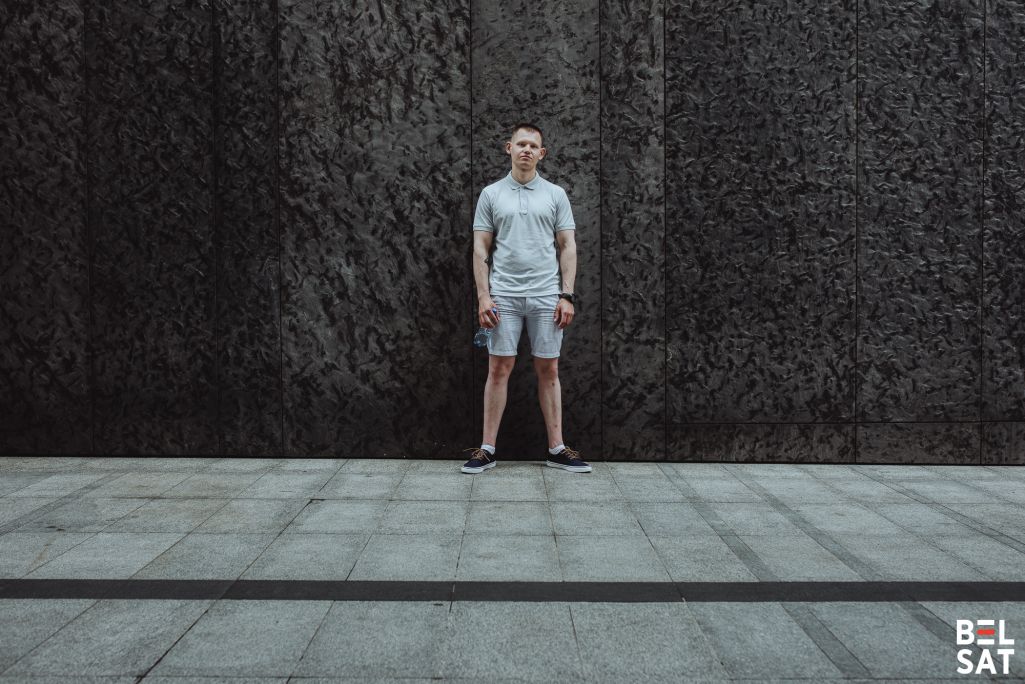
Top photo via Raoul Duke / belsat.eu.

